Coral bleaching: what it is, why it happens and what it means for reefs
The fourth global coral bleaching event has affected about 84% of the world’s reefs. What bleaching is, why it happens, whether reefs can recover, and what you can do.
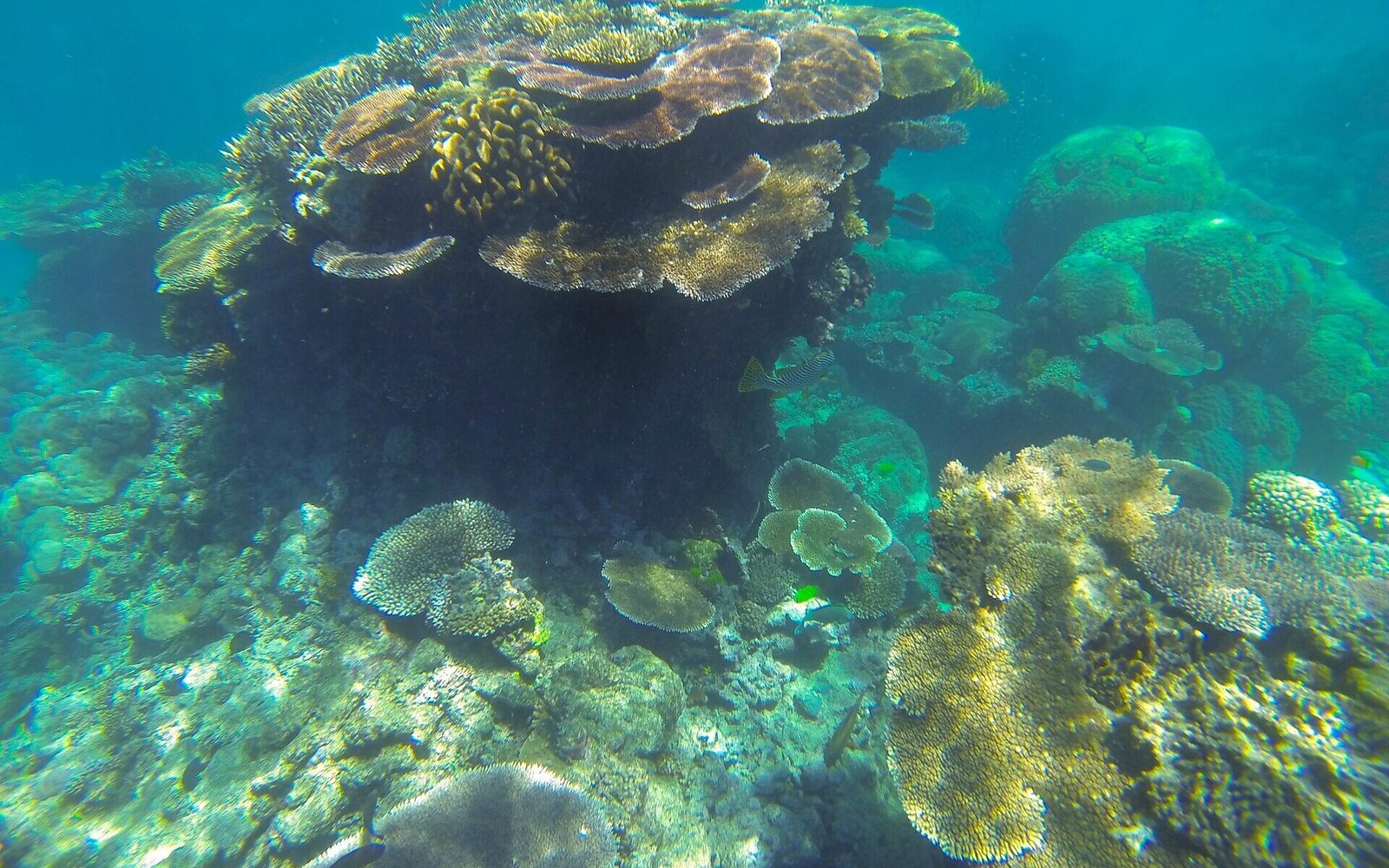
Coral bleaching is the clearest sign of how climate change is affecting the ocean. In April 2025 scientists reported that the fourth global bleaching event, which began in 2023, had affected about 84% of the world’s coral reef area in at least 82 countries, the most extensive bleaching ever recorded. Here’s what bleaching is and what it means for the reefs on our list.
What is coral bleaching?
Reef-building corals live in partnership with tiny algae inside their tissues, which provide most of their food and much of their colour (see what is a coral reef?). When corals are stressed, they expel the algae. Without them, the coral’s white limestone skeleton shows through its clear tissue, and the coral looks bleached. A bleached coral is still alive, but it is starving.
What causes it?
The main cause is heat. Corals live close to the upper limit of the temperatures they can tolerate, and a rise of just 1°C above the usual summer maximum, if it lasts for several weeks, can trigger bleaching. Scientists measure heat stress in “degree heating weeks”. Bleaching can also be caused by cold, very low tides, pollution and changes in salinity, but marine heatwaves driven by climate change are responsible for almost all mass bleaching.
Can bleached coral recover?
Yes, if conditions return to normal quickly enough, corals can take back their algae and recover within weeks or months. If the heat lasts too long, they die, and the reef becomes covered in algae. A reef that loses most of its coral can take a decade or more to recover, and only if it isn’t hit again in the meantime. Fast-growing branching and table corals recover quickest but are also the most likely to bleach.
The four global bleaching events
- 1998: the first global event, linked to a strong El Niño, killed an estimated 8% of the world’s coral.
- 2010: the second global event.
- 2014–2017: the third event, which affected about two-thirds of the world’s reefs and caused severe damage on the Great Barrier Reef.
- 2023 onwards: the fourth event, confirmed by the US National Oceanic and Atmospheric Administration in April 2024, and the most widespread yet.
How the top 20 reefs have fared
- The Great Barrier Reef: five mass bleaching events since 2016. Coral cover is recovering in the north and centre, according to the latest surveys.
- Florida: a record heatwave in 2023 caused severe bleaching and coral deaths, and huge restoration efforts are under way.
- The Mesoamerican Reef: severe bleaching in 2023–24, with some reefs in Honduras losing most of their coral.
- Chagos: about 85% of reefs affected and around a quarter of the coral killed by late 2024, despite almost no local human pressure.
- Raja Ampat and the northern Red Sea: both long seen as thermal refuges, both affected this time.
- Palau: its fast recovery after 1998 is still one of the best examples of reef resilience.
Is there hope?
Yes, but it depends on what we do. Reefs that are protected from overfishing and pollution recover better from bleaching. Scientists are breeding heat-tolerant corals, restoring reefs with nursery-grown fragments, and mapping refuges where cooler water may help corals survive. Above all, the future of coral reefs depends on limiting global warming. Scientists warn that if warming reaches 2°C above pre-industrial levels, the vast majority of today’s tropical reefs could be lost.
As a visitor, you can help by choosing responsible operators, using reef-safe sunscreen, and supporting the marine parks you visit; their fees pay for the rangers and research that give reefs the best chance.
Planning a trip? Our guide to the best snorkelling in the world includes how to snorkel without harming the reef.
Questions people ask
Is bleached coral dead?
Not necessarily. Bleached coral is alive but stressed and starving. It can recover if temperatures fall soon enough.
What is the main cause of coral bleaching?
Prolonged high sea temperatures caused by marine heatwaves, which climate change is making more frequent and more intense.
How much of the world’s coral has been affected?
The fourth global bleaching event had affected about 84% of the world’s coral reef area by April 2025.
Some links on this page earn us a commission at no extra cost to you. How this site makes money